text size - +

spacer

Mesothelioma Treatments

Mesothelioma is a difficult disease to treat effectively. Even after decades of mesothelioma treatments, there is still no cure for the disease and historical methods for controlling its progression have not been very effective. However, recent advances in our understanding of the disease’s complex biology have led to definite improvements in the effectiveness of the standard therapies, which is seen most clearly with the increase in median survival times reported by some classes of patients. Even as much more work needs to be completed before the medical community can say it has turned a corner in the treatment of mesothelioma, the increase in survival times as seen in patients treated with Alimta or with an effective multimodal protocol points to a future for mesothelioma treatments that is a little brighter and a little more hopeful than it used to be.

Mesothelioma Treatment Indications

Before a physician can develop a treatment plan, the patient must undergo a workup and complete a range of tests so the doctor can identify the extent of the cancer involved, the present stage of the disease, the histological subtype of the malignancy, as well as the patient’s overall health and performance status. This information will be used to develop a treatment plan tailored to the patient’s individual situation. For example, if the disease is diagnosed at an early stage and the patient presents with the epithelial histological form, then radical surgery with curative intent will likely be the decision. However, if the same patient’s histological subtype is sarcomatoid mesothelioma, which is known to be highly resistant to many treatments, then the doctor may decide upon a different therapeutic strategy. The physician needs as complete an understanding of the patient’s presentation as possible if he or she is to develop an effective treatment plan.

Mesothelioma Treatment Strategies

The first step in the development of any treatment protocol will likely be the decision on how aggressively to fight the cancer. As with most forms of serious illness, there are two basic therapeutic strategies for the treatment of mesothelioma: palliative treatments, which are used to manage the patient’s experience of the symptoms associated with a disease, but which do not attempt to cure or control disease itself, and treatments with curative intent, which refer to techniques whose end goal is a complete cure or at least full control of the disease at hand. Because mesothelioma has no cure, these treatments are sometimes referred to as life-extending treatments.

While all uses of the term “palliative treatment” refer to a treatment strategy based on symptom control, there are often subtle differences in meaning when the term is deployed. To some people, the term “palliative treatment” refers to any attempt to actively control individual symptoms, while for others the term refers only to the care given to ease the burden of end-of-life symptoms, or symptoms of very advanced disease. This can also be known as supportive care. Our use of the term “palliative treatment” encompasses both of the meanings as presented here.

Once the doctor has decided upon a treatment strategy, he or she will then monitor the patient’s response to therapy and make adjustments to the treatment plan based on this monitoring. In many instances, a patient will begin treatment with an aggressive, ‘intent to cure’ protocol, but will be transitioned to a more a palliative treatment plan if the disease stops responding to the aggressive therapies.

Mesothelioma Treatment Modalities

A number of different modalities are employed in the treatment of mesothelioma. The traditional therapies of surgery, chemotherapy and radiation therapy—used individually or in concert during multimodal therapy—make up the majority of mesothelioma treatment plans, but there are also more experimental treatments available to some patients. Many of these investigational treatments have shown great promise in laboratory settings and are currently undergoing clinical trials to examine their clinical safety and efficacy.

Traditional Mesothelioma Treatment Options

  •  Surgery (physical removal of the cancer)
    Surgery involves the physical removal or other operative treatment of the cancer. There are several different surgeries available for mesothelioma patients, some of which are used palliatively to treat symptoms and some of which are considered radical surgery and used with curative intent. The physician will decide upon the nature and type of surgery to be performed based on his or her overall treatment strategy and the information determined during the patient’s workup.

    Learn more: Mesothelioma Treatments: Surgery

  •  Chemotherapy (using drugs to fight the cancer)
    Chemotherapy uses drugs and other chemical agents to kill cancer cells. It is referred to as systemic treatment because the drug is introduced into the patient’s bloodstream and travels throughout the body killing cancer cells. The introduction of pemetrexed-based chemotherapy has improved the efficacy of chemotherapy treatment for mesothelioma patients.

    Learn more: Mesothelioma Treatments: Chemotherapy

  •  Radiation Therapy (using radiation to kill cancer cells)
    Radiation therapy uses ionizing radiation to destroy cancer cells and shrink tumors. For mesothelioma treatments, radiation can be used as part of a multimodal treatment protocol or it can be used in a palliative manner to reduce the pain associated with the disease.

    Learn more: Mesothelioma Treatments: Radiation Therapy

 Multimodal and Trimodal Mesothelioma Treatment Options

Doctors will often develop a treatment plan that combines two or more of these treatment options. This is known as multimodal therapy and it offers the most effective treatment for malignant mesothelioma patients. Recent research has shown that trimodal therapy, in which all three of the traditional modalities are used, offers the best chance at long-term survival for patients who are eligible for it.

Non-Traditional Mesothelioma Treatment Options

  •  Photodynamic Therapy
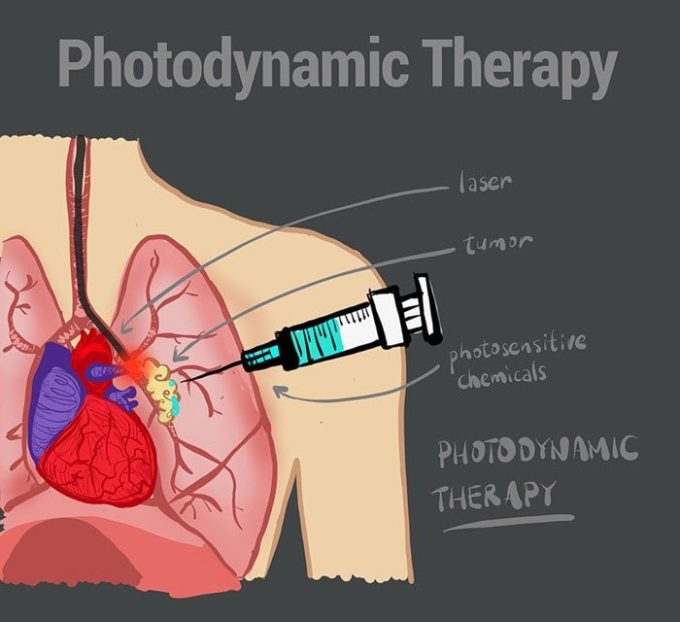
    Photodynamic therapy destroys cancer cells by using the energy from light and may also be effective when combined with surgery. Although this treatment is in the experimental stage for mesothelioma, it has shown promising results in treating other cancers.

  •  Gene Therapy
    This is a new treatment, currently in clinical trials. This approach allows treatment to target tumors, rather than destroying healthy cells which is the negative of traditional chemotherapy.

  •  Immunotherapy
    Immunotherapy (or biological therapy) treats cancer by using the body’s own immune system to fight cancer cells. Another name often applies to this therapy: biological response modifiers (BRMs).

Importance of Specialists for Mesothelioma Treatment

Due to the disease’s relative rarity among the general population, it is highly recommended that patients seek experienced mesothelioma specialists for development of their treatment plans. These specialists will be aware of the latest research and clinical trials involving each of these modalities discussed above and will be able to develop a more informed treatment plan than would a physician who does not specialize in the disease.

In many cases, the mesothelioma specialist will develop the protocol and will supervise  its implementation, but the patient will still meet with his or her personal doctor as well.

Related Information

Rapid Response

Our staff is available to answer your questions, point you in the right direction or provide additional information. Feel free to submit questions or comments below.
Name:
Phone:
Email:
Summary:
How did you Find Us?

Email Alerts

100 Questions & Answers

100 Questions & AnswersMesothelioma is a serious cancer that occurs in individuals exposed to asbestos. Contact us now and we will send you a complementary copy of “100 Questions & Answers About Mesothelioma” by Harvey I. Pass.
Clinical Trails

Recipe of the week

New Tuna Salad, a healthy twist on an old favorite for cancer patients more

Attorney Advertising - Legal Disclaimer
Speaking with an Attorney? Your Legal Rights
Read Our Privacy Policy - Privacy Policy
Read Our Medical Disclaimer: Medical Disclaimer
** Persons depicted in any pictures are actors. They are not clients. **

Copyright © 2007 - Belluck & Fox
Mesothelioma Lawyers | Asbestos Attorneys

Malignant Mesothelioma Pleural Mesothelioma Peritoneal Mesothelioma Mesothelioma Diagnosis Mesothelioma Symptoms Mesothelioma Stages Mesothelioma Prognosis
Mesothelioma Treatment Mesothelioma Treatment: Surgery Mesothelioma Treatment: Chemotherapy Mesothelioma Treatment: Radiation
Mesothelioma News Mesothelioma and Lung Cancer Mesothelioma Clinical Trials Mesothelioma and the Navy
Mesothelioma Doctors Mesothelioma Hospitals

Asbestos Occupational Hazards of Asbestos Exposure Asbestos News Asbestosis

Site by Consultwebs.com: Law Firm Website Designers / Personal Injury Lawyer Marketing