Mesothelioma Treatments
While there is currently no cure for malignant mesothelioma, treatments are available which can manage the disease in some patients and provide pain relief for others.
The most common treatments for mesothelioma are surgery and chemotherapy. Radiation therapy can be used in conjunction with either therapy, but hasn’t shown to be as effective as a primary treatment modality as surgery or chemotherapy.
Upon receiving a diagnosis of mesothelioma, a patient will undergo a work-up to determine his or her “performance status,” which is a measure of overall patient health. This description helps the doctor generate a treatment regimen tailored to the patient.
There are a number of factors that will impact the doctor’s development of a treatment regimen:
- Location of disease (pleural / peritoneal / pericardial / tunica vaginalis)
- Histological subtype of the disease
- Stage of disease
- Patient performance status
- Other patient factors may also come into play
The information provided throughout this website is for your information only, and should NOT take the place of a full medical diagnosis.
As in all forms of cancer treatment, there are traditional modalities for the treatment of mesothelioma, as well as experimental, non-traditional options.
Traditional Mesothelioma Treatment Options
- Surgery (physical removal of the cancer)
- There are several types of surgeries that may be available for mesothelioma. The disease type, stage and the individual’s age and condition will determine if and what type of surgery may be performed.
- Chemotherapy (using drugs to fight the cancer)
- Chemotherapy uses drugs to kill cancer cells. These drugs target rapidly-dividing cells and attempt to inhibit this division of cells. Chemotherapy may be used as the primary treatment to mesothelioma, or it may be used as part of a multi-modal approach.
- Radiation Therapy (using high-dose x-rays to kill cancer cells)
- Radiation therapy uses high-energy x-rays help to destroy cancer cells and shrink tumors. The radiation may come from outside the body from a machine (external radiation) or from radioactive materials placed directly in or around cancer cells through thin plastic tubes (internal or implant radiation).
Multi-modal treatment refers to the combination of two or more treatment modalities in treating patients. This often means the combination of surgery and chemotherapy, but may involve other variants as well: surgery and radiation, chemotherapy and radiation. When the three modalities mentioned here are used together, this is known as tri-modal therapy.
Non-Traditional Mesothelioma Treatment Options
Along with these traditional modes of mesothelioma treatment, there are more experimental forms of treatment that are the subject of pre-clinical studies and of clinical trials. None of the following therapies have been proven as effective as the traditional modes, but each mode offers a potentially new means of mesothelioma treatment.
For more information about non-traditional mesothelioma treatment options, please follow this link: non-traditional mesothelioma treatment options
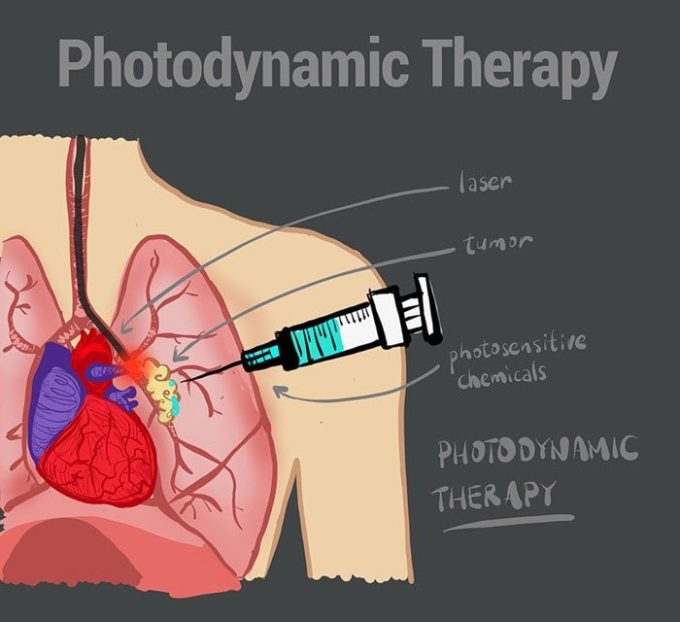
- Photodynamic Therapy
- Photodynamic therapy destroys cancer cells by using the energy from light and may also be effective when combined with surgery. Although this treatment is in the experimental stage for mesothelioma, it has shown promising results in treating other cancers.
- Gene Therapy
- This is a new treatment, currently in clinical trials. This approach allows treatment to target tumors, rather than destroying healthy cells which is the negative of traditional chemotherapy.
- Immunotherapy
- Immunotherapy (or biological therapy) treats cancer by using the bodys own immune system to fight cancer cells. Another name often applies to this therapy: biological response modifiers (BRMs).